

Industrial Steel Grating Price List and Selection Guide
Navigating the procurement of industrial flooring requires a clear understanding of how material specifications and load-bearing requirements influence a steel grating price list. For engineers and procurement managers, the goal is to balance structural integrity with cost-efficiency. Whether you are designing a heavy-duty industrial platform or a light-duty drainage cover, the choice of bearing bar dimensions and surface treatment directly dictates the final investment. By focusing on international standards like ANSI/NAAMM and BS4592, buyers can ensure that the products they source provide long-term durability and safety, reducing the total cost of ownership through minimized maintenance and replacement cycles.

Evaluating Technical Standards for Industrial Steel Grating Selection
Selecting the correct grating system begins with adherence to rigorous manufacturing standards. In the global market, compliance with China's YB/T4001.1-2007, British BS4592-1-1995, and American ANSI/NAAMM (MBG531-88) ensures that the product can withstand the designated loads without excessive deflection. These standards regulate everything from the welding strength between the bearing bar and the cross bar to the precision of the dimensions.
Expertise in CAD layout design is critical for complex installations. Professional designers can optimize the grating layout to meet specific architectural requirements, ensuring that special-shaped grating or custom-sized panels fit perfectly into the project's footprint. This precision prevents onsite modifications, which often compromise the protective coating and lead to premature corrosion.
- Heavy-Duty Grating: Engineered for high-traffic industrial zones and vehicle crossings.
- Light-Duty Grating: Ideal for pedestrian walkways and maintenance platforms.
- Specialized Solutions: Including stainless steel grating for corrosive environments and plug-in types for easy access to underground utilities.

Material Performance and Corrosion Resistance Strategies
The environment in which the grating is installed is the primary driver of material selection. For standard industrial use, hot-dip galvanization provides a robust zinc layer that protects the steel from oxidation. However, in chemical plants or coastal regions, stainless steel grating is often the only viable option due to its superior resistance to chlorides and acidic vapors.
Beyond the base material, the geometry of the product affects its performance. For example, serrated bars are frequently utilized in oily or wet environments to provide enhanced slip resistance, ensuring worker safety. The intersection of the bearing bar and cross bar must be securely welded to prevent structural failure under dynamic loads, a detail that differentiates professional export-grade products from low-cost alternatives.
Practical Applications Across Industrial and Urban Infrastructure
Steel grating is an indispensable component in modern infrastructure due to its high strength-to-weight ratio and permeability. In the mining and petroleum sectors, heavy-duty grating supports massive machinery and provides secure walkways for technicians. In urban settings, the application shifts toward utility management, where ditch covers and tree pool covers protect pedestrians while allowing water drainage and air circulation.
Another critical application is in the construction of stair treads and foot pedals. These components require precise anti-slip features and reinforced edges to handle frequent impact. By integrating compound steel grating or specialized plug-in systems, facility managers can create modular environments that are easy to upgrade or repair without shutting down entire production lines.
Comparison of Grating Types by Application Requirement
| Grating Category | Primary Load Capacity | Recommended Environment | Key Technical Feature |
|---|---|---|---|
| Heavy-Duty Steel | High (Vehicle/Industrial) | Factories, Warehouses | Thick Bearing Bars |
| Light-Duty Steel | Medium (Pedestrian) | Walkways, Mezzanines | Weight Optimization |
| Stainless Steel | Variable | Food Grade, Chemical Plants | Corrosion Resistance |
| Compound Grating | High | High-Corrosion Zones | Hybrid Material Core |
| Serrated Grating | Medium to High | Oil Rigs, Wet Areas | Anti-Slip Surface |
Supply Chain Considerations for Large-Scale Procurement
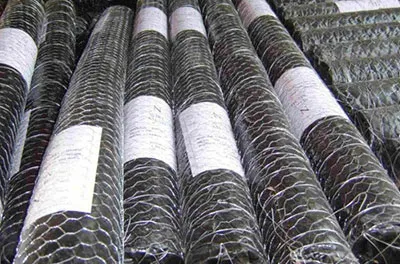
When sourcing steel products on a global scale, the reliability of the manufacturer's quality control process is more important than the initial quote. A supplier with extensive export experience—such as 18 years in international trade—understands the nuances of shipping and packaging. For instance, using waterproof paper in rolls for wire mesh or reinforced crates for heavy grating prevents transit damage and oxidation before the product reaches the site.
Customization capabilities are also a key differentiator. The ability to provide OEM services based on detailed CAD drawings allows for the production of special-shaped grating that fits unique architectural voids. This reduces the need for onsite cutting, which is a common cause of coating failure and subsequent rust.
Procurement Framework for Maximizing Return on Investment
To optimize the procurement process, buyers should implement a technical evaluation framework before requesting a steel grating price list. This includes defining the maximum load per square meter, the environmental pH levels, and the required safety certifications. By providing these specifications upfront, manufacturers can suggest the most cost-effective bar size and spacing, avoiding over-engineering that leads to unnecessary costs.
Furthermore, considering the repeat order rate of a supplier is a strong indicator of product consistency. A high rate of returning clients typically signals that the manufacturing stages strictly adhere to international quality standards, ensuring that the second or third batch of products is identical in quality to the first. This consistency is vital for large-scale projects spanning several years of construction.
Frequently Asked Questions Regarding Steel Grating Procurement
Are free samples available for technical validation?
Yes, we can provide free samples to clients to ensure the material and finish meet their project specifications before mass production begins.
What is the typical lead time for sample production?
Generally, if the goods are in stock, samples can be sent immediately via air express within 2 to 3 days.
How long does mass production usually take?
Mass production is normally completed within 20-25 days, depending on the order volume and complexity of the specifications.
Can you manufacture products based on custom CAD drawings?
Yes, we provide OEM services and have experienced CAD designers who can develop perfect layout designs to meet your special requirements.
Which international standards do your products comply with?
Our products can be produced in accordance with China's YB/T4001.1-2007, British BS4592-1-1995, and American ANSI/NAAMM (MBG531-88) standards.
What types of steel grating are available for specialized industrial use?
We specialize in heavy-duty and light-duty steel grating, stainless steel grating, compound steel grating, and special-shaped grating for various industrial applications.
Technical References and Industry Standards
- American National Standards Institute (ANSI)
- British Standards Institution (BSI)
- National Association of Manufacturers of Metal Castings (NAAMM)
- International Organization for Standardization (ISO)
For professional consultation regarding specifications or to obtain a tailored technical quote, please contact our engineering team. We are committed to providing high-quality steel solutions with the fastest delivery times and full technical support.
Related Industrial Mesh Solutions