Mesh wire suppliers play a critical, often unseen, role in modern infrastructure and a surprising number of humanitarian efforts globally. These companies provide the essential materials for everything from reinforced concrete in buildings and bridges to protective fencing for agriculture and security applications, and increasingly, for innovative solutions in disaster relief and sustainable construction. The quality and reliability of these suppliers directly impact the safety, durability, and cost-effectiveness of countless projects worldwide. Understanding the landscape of mesh wire suppliers is vital for engineers, contractors, governments, and organizations focused on responsible development.
The demand for mesh wire is constantly evolving, driven by factors like population growth, urbanization, and increasing awareness of safety and environmental concerns. Consequently, the role of mesh wire suppliers isn’t limited to simply providing materials; it extends to offering expertise in material selection, custom fabrication, and logistical support. Navigating this complex market requires careful consideration of factors like production capacity, quality control certifications, and supply chain resilience. This is crucial to ensure projects remain on schedule and within budget.
Ultimately, choosing the right mesh wire suppliers is an investment in long-term project success and responsible stewardship of resources. From bolstering critical infrastructure to enabling rapid response in emergencies, these suppliers are instrumental in building a more resilient and sustainable future. Their importance is only set to increase as global challenges demand innovative and reliable material solutions.
Introduction: The Importance of mesh wire suppliers
Mesh wire suppliers are foundational to numerous industries, providing the reinforcing materials crucial for construction, manufacturing, and security. Their impact extends beyond simply supplying a product; they contribute to the integrity, longevity, and safety of vital infrastructure and countless everyday applications. mesh wire suppliers are evolving to meet complex demands.
The global market for mesh wire is substantial, with a continually increasing demand driven by infrastructure development, particularly in emerging economies. The United Nations estimates that trillions of dollars in infrastructure investment will be required over the next decade, and mesh wire will be an indispensable component of many of these projects. Selecting the right supplier is paramount to successful project completion and adherence to quality standards.
Defining Mesh Wire Suppliers
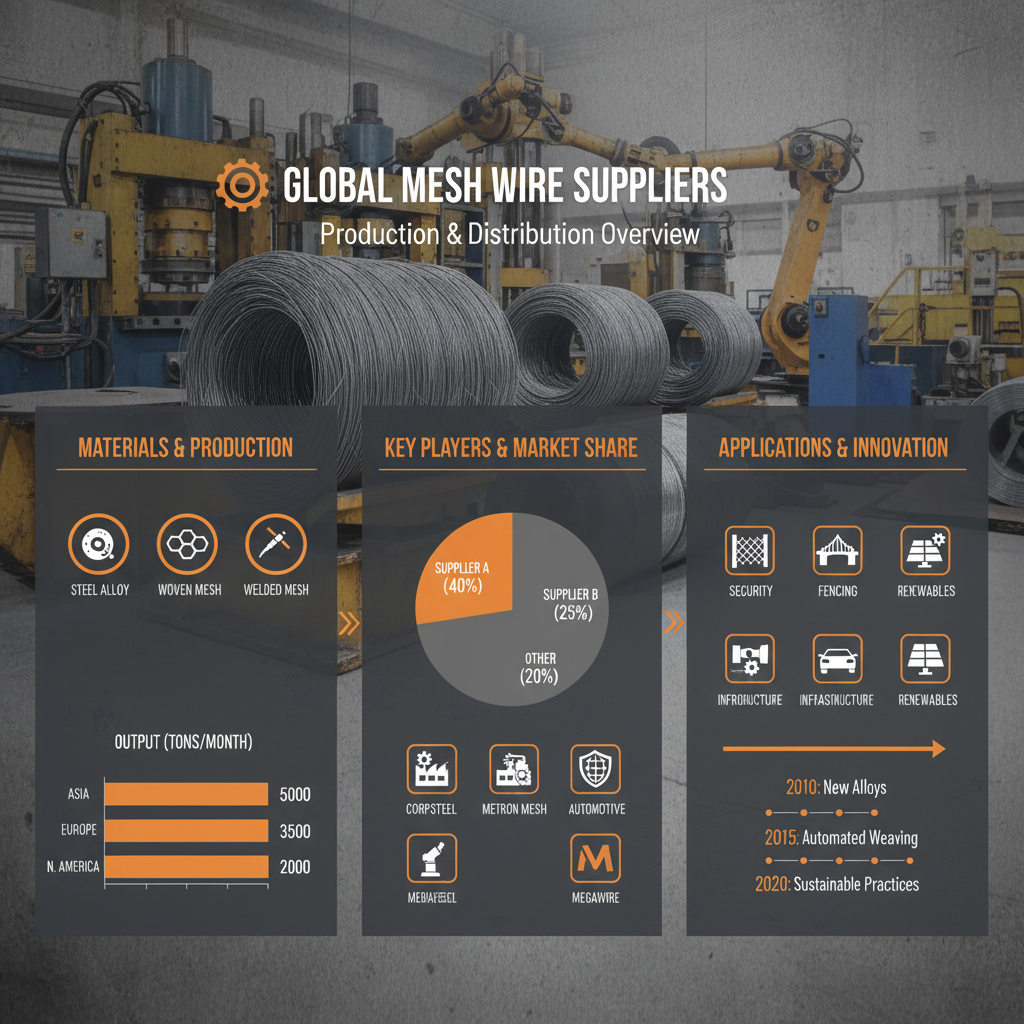
Mesh wire suppliers are companies specializing in the manufacturing and distribution of woven, welded, or expanded metal mesh. This mesh is created from various materials, most commonly steel, stainless steel, aluminum, and copper, but can also include specialized alloys depending on the application. They cater to a diverse client base, including construction companies, manufacturers, agricultural businesses, and governmental organizations.
Their role isn’t limited to providing standard mesh products. Many mesh wire suppliers also offer custom fabrication services, tailoring mesh to specific dimensions, shapes, and material requirements. This often involves cutting, bending, welding, and finishing processes to meet precise specifications. This capacity for customization is particularly important for specialized applications like architectural features or industrial filters.
The connection to modern industry and humanitarian needs is profound. From reinforcing concrete in skyscrapers to providing security fencing for critical infrastructure and creating lightweight, durable shelters in disaster zones, mesh wire is a versatile material enabling progress and safety. Choosing reliable mesh wire suppliers is essential for any project.
Key Characteristics of Quality mesh wire suppliers
A key characteristic of quality mesh wire suppliers is a robust quality control system. This includes rigorous testing of raw materials and finished products to ensure compliance with industry standards like ISO 9001. Traceability is also crucial, allowing suppliers to track materials back to their source and verify their composition and properties.
Another essential attribute is a strong supply chain network. Reliable suppliers maintain relationships with multiple material sources and have efficient logistics systems to ensure timely delivery, even during periods of high demand or supply chain disruptions. This also means possessing ample inventory and the capability to handle large orders efficiently.
Finally, exceptional customer service is paramount. Quality mesh wire suppliers provide technical expertise, assisting clients with material selection, product customization, and application guidance. They are responsive to inquiries, offer competitive pricing, and prioritize building long-term relationships based on trust and mutual benefit.
Critical Factors in Supplier Selection
When selecting mesh wire suppliers, several critical factors must be considered. First, assess the supplier’s production capacity to ensure they can meet your project's volume requirements without compromising quality or delivery timelines. Second, verify their adherence to relevant industry standards and certifications, demonstrating a commitment to quality and safety.
Third, evaluate their material expertise and ability to offer customized solutions. Can they fabricate mesh to your exact specifications, including specific materials, dimensions, and finishes? And finally, thoroughly investigate their reputation and track record, seeking references from past clients to gauge their reliability and customer satisfaction.
Supplier Evaluation Metrics
Global Applications and Industries Served
The applications of mesh wire are remarkably diverse. In construction, it’s used for reinforcing concrete, creating prefabricated wall panels, and providing security fencing. The agriculture sector utilizes mesh for animal enclosures, crop protection, and greenhouse structures. Manufacturing industries employ mesh in filtration systems, conveyor belts, and protective shielding.
Globally, these applications translate into significant demand across various regions. Developing nations undergoing rapid infrastructure growth, like those in Southeast Asia and Africa, represent major markets. Furthermore, disaster-prone areas require mesh for temporary shelters, debris containment, and post-disaster reconstruction efforts. Effective mesh wire suppliers play a vital role in enabling these efforts.
Benefits and Long-Term Value
Choosing reliable mesh wire suppliers translates into tangible benefits, including reduced project costs through efficient material utilization and minimized waste. The durability and longevity of high-quality mesh contribute to long-term structural integrity, reducing maintenance requirements and extending the lifespan of assets.
Beyond financial considerations, partnering with reputable suppliers fosters trust and promotes sustainable practices. Responsible mesh wire suppliers prioritize environmental stewardship, utilizing recycled materials and minimizing their carbon footprint. This aligns with growing demands for eco-friendly construction and manufacturing processes.
Ultimately, the long-term value lies in the peace of mind that comes with knowing your projects are built on a foundation of quality, reliability, and ethical sourcing.
Future Trends in the mesh wire suppliers Industry
The mesh wire suppliers industry is poised for significant innovation. Emerging trends include the development of lighter, stronger, and more corrosion-resistant materials, such as advanced alloys and composite meshes. Automation and digital technologies are also transforming manufacturing processes, improving efficiency and customization capabilities.
Sustainability is becoming increasingly important, with a growing focus on recycled content, reduced energy consumption, and circular economy principles. Furthermore, the integration of smart technologies, like embedded sensors in mesh structures, will enable real-time monitoring of structural integrity and performance.
These advancements will not only enhance the functionality and durability of mesh wire but also contribute to a more sustainable and resilient built environment.
Overview of Key Evaluation Criteria for mesh wire suppliers
| Material Quality |
Production Capacity |
Lead Time & Logistics |
Customization Options |
| Raw material sourcing and testing procedures. |
Maximum monthly production volume in tons. |
Average delivery time for standard orders. |
Availability of bespoke mesh designs and sizes. |
| Compliance with relevant industry certifications (e.g., ISO). |
Ability to handle large-scale projects and urgent requests. |
Shipping options and global reach. |
Minimum order quantity for customized products. |
| Corrosion resistance and durability testing results. |
Investment in modern manufacturing equipment. |
Inventory management and stock availability. |
Engineering support for complex applications. |
| Material composition analysis and traceability. |
Scalability of production to meet future demand. |
Supply chain resilience and risk mitigation strategies. |
Prototyping capabilities and turnaround time. |
| Adherence to environmental regulations and sustainable practices. |
Quality control processes throughout the production cycle. |
Tracking and tracing of shipments. |
Availability of different mesh patterns and weaves. |
| Third-party testing and independent verification of quality. |
Financial stability and long-term viability of the supplier. |
Customer service responsiveness and technical support. |
Cost-effectiveness and competitive pricing. |
FAQS
Reputable mesh wire suppliers generally offer a diverse range of materials, including carbon steel, stainless steel (grades 304, 316, and others), aluminum, galvanized steel, and specialized alloys like Monel or Inconel. The choice of material depends heavily on the intended application, considering factors like corrosion resistance, strength requirements, and cost considerations. High-quality suppliers will provide detailed material specifications and certifications to ensure compliance with industry standards.
Look for suppliers with ISO 9001 certification, demonstrating a robust quality management system. Other valuable certifications include ISO 14001 (environmental management) and OHSAS 18001 (occupational health and safety). Depending on your application, specific industry certifications might be required, such as those related to food safety or medical device manufacturing. Verification of these certifications is crucial to ensure product reliability and regulatory compliance.
Clear communication is key. Provide the supplier with detailed drawings, specifications, and quantity requirements. Request samples for approval before placing a large order. Insist on a quality control plan that includes dimensional checks, material testing, and visual inspections. A reputable supplier will be willing to provide documentation and collaborate to ensure your requirements are met.
Lead times for custom orders vary depending on the complexity of the design, the material required, and the supplier’s current workload. Generally, expect lead times ranging from 2 to 8 weeks. However, it’s crucial to discuss lead times upfront and obtain a firm commitment from the supplier. Factors like material availability and fabrication capacity can influence delivery schedules.
Most established mesh wire suppliers have partnerships with logistics providers to facilitate efficient shipping both domestically and internationally. They typically offer various shipping options, including LTL (less-than-truckload), FTL (full-truckload), and air freight. Be sure to clarify shipping costs, insurance options, and estimated delivery times before finalizing your order.
Sustainability is gaining prominence. Look for suppliers who prioritize recycled content, minimize waste generation, and employ energy-efficient manufacturing processes. Some suppliers are also exploring innovative materials and designs to reduce the environmental impact of their products. Choosing a sustainable supplier aligns with responsible business practices and contributes to a greener future.
Conclusion
In conclusion, mesh wire suppliers are fundamental to a vast range of industries and applications, providing the essential materials that underpin modern infrastructure, security, and innovation. Selecting a reliable supplier demands careful consideration of factors like material quality, production capacity, customization capabilities, and commitment to sustainability. By prioritizing these aspects, businesses and organizations can ensure project success, minimize risks, and contribute to a more resilient and responsible future.
Looking ahead, the mesh wire industry will continue to evolve, driven by technological advancements and a growing emphasis on sustainability. Staying informed about emerging trends, such as the development of advanced materials and the integration of smart technologies, will be crucial for making informed decisions and maximizing the value of this essential component. For top-quality mesh wire solutions, visit our website: www.chengsenwiremesh.com.




.png "E-mail")