

Selecting the right industrial grating products is a critical engineering decision that directly impacts the safety, durability, and operational efficiency of industrial flooring and platform systems. In the metal structure manufacturing sector, grating serves as the primary interface between personnel and the industrial environment, requiring a precise balance of load-bearing capacity and slip resistance.
Many procurement officers and project engineers struggle with matching specific material grades—such as galvanized steel, stainless steel, or FRP—to the chemical and mechanical stresses of their specific site. The wrong choice often leads to premature corrosion, structural failure, or increased maintenance downtime, which can be costly in high-throughput manufacturing environments.
This professional analysis provides a framework for evaluating industrial grating specifications, comparing material performance, and identifying the key technical parameters necessary to ensure compliance with international safety standards like ANSI/NAAMM and BS4592.

Core Material Classifications and Properties

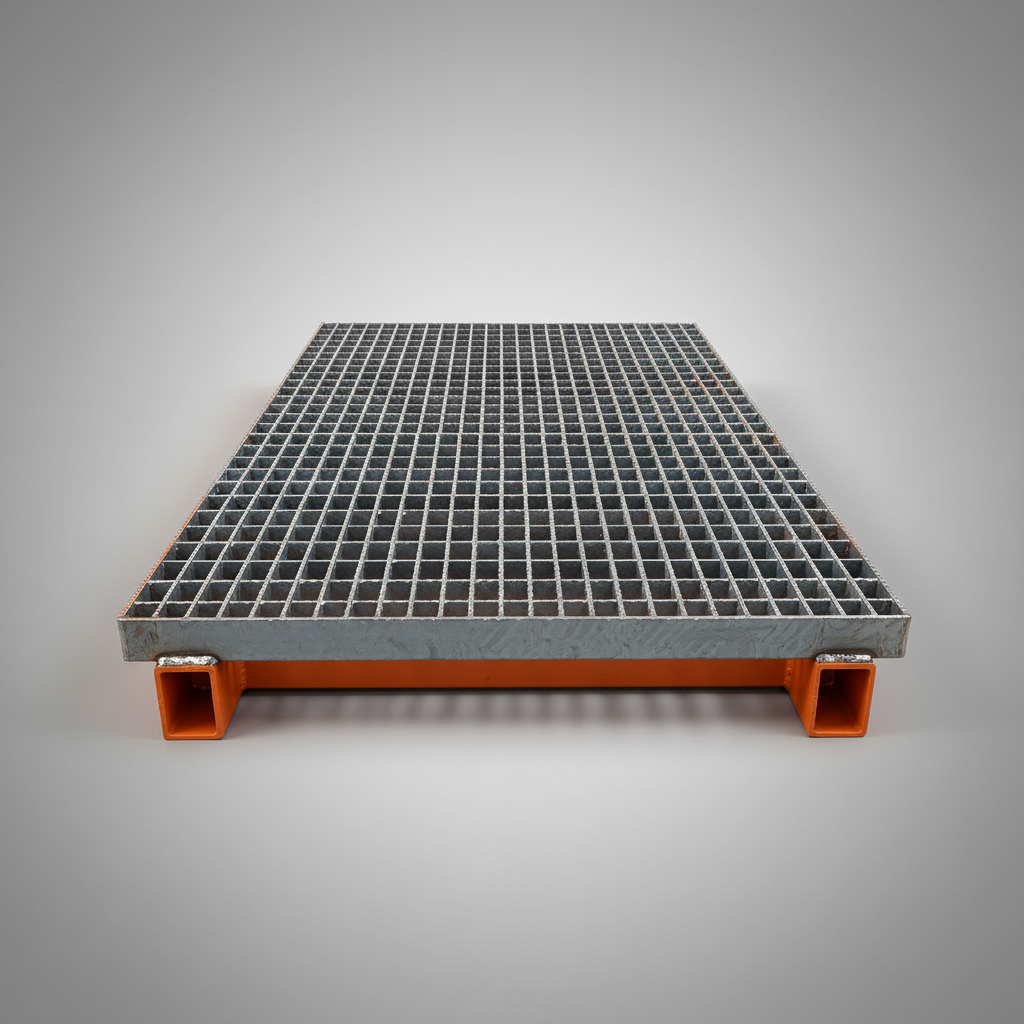
Industrial grating products are categorized primarily by their base material, which determines their resistance to environmental stressors. Steel grating remains the industry standard for heavy-duty structural applications due to its high tensile strength and rigidity. To prevent oxidation, these are typically hot-dip galvanized, creating a protective zinc layer that prevents rust in humid or outdoor settings.
For environments with extreme chemical exposure or high moisture, stainless steel grating and FRP (Fiber Reinforced Plastic) grating are utilized. Stainless steel offers superior corrosion resistance and hygiene, making it ideal for food processing and pharmaceutical plants. FRP grating, while not suitable for extreme heavy-load structural beams, provides a non-conductive and lightweight alternative that is completely immune to electrochemical corrosion.
Technical Load-Bearing Parameters
The structural integrity of grating is defined by the relationship between the bearing bar size and the cross-bar spacing. The bearing bars are the primary load-carrying members, and their depth is the most significant factor in determining the maximum allowable span before deflection occurs. Increasing the thickness of the bearing bar directly enhances the load-carrying capacity but adds to the overall weight of the structure.
Cross bars, which are welded or pressed into the bearing bars, ensure lateral stability and prevent the bearing bars from twisting. A tighter mesh aperture (the space between bars) improves walking safety and prevents small objects from falling through, but it can also affect the drainage of liquids and debris. Engineering calculations must account for the "effective rate of cross section" to ensure the grating can support the anticipated live and dead loads.
Critical Industrial Application Scenarios
In heavy-duty manufacturing and mining, grating is deployed as ditch covers and plant platforms where it must withstand vehicle traffic and heavy machinery movement. In these cases, heavy-duty steel grating with deep bearing bars is mandatory to prevent deformation. The focus here is on structural rigidity and the ability to withstand high-impact point loads.
Conversely, in offshore oil rigs or wastewater treatment plants, the priority shifts toward corrosion resistance. Here, stainless steel or specialized FRP grating is used to combat saline air and sulfuric acid exposure. In architectural or commercial industrial settings, decorative wire mesh and lighter steel grating are often chosen to balance aesthetic requirements with functional safety, such as for stair treads and pedestrian catwalks.
Relative Performance Index by Material
Evaluating the suitability of industrial grating products requires a normalized comparison of different material properties. While steel offers the highest raw strength, its longevity in corrosive environments is lower than that of stainless steel or FRP. This conceptual index illustrates the relative trade-offs between load capacity, corrosion resistance, and installation ease.
As shown in the illustrative framework above, galvanized steel provides an optimal balance for general industrial use. Stainless steel peaks in corrosion resistance, while FRP offers the highest advantage in terms of weight reduction and ease of installation. The "Relative Score" is a conceptual value used to guide initial material selection before detailed engineering calculations are performed.
Compliance and Global Safety Standards
To ensure operational safety, grating must be produced according to recognized international standards. In the United States, the ANSI/NAAMM (MBG531-88) standard provides the guidelines for load tables and manufacturing tolerances. In the UK and Europe, BS4592 is the primary reference for the design and installation of steel grating, focusing on deflection limits and safety factors.
Compliance extends beyond the material itself to the installation method. Proper anchoring and the use of specific clipping systems are required to prevent the panels from shifting. Furthermore, for environments requiring high slip resistance, serrated bearing bars are often mandated by safety regulations to provide additional grip in oily or wet conditions, reducing the risk of workplace accidents.
Common Procurement and Engineering Risks
One of the most frequent mistakes in procurement is the under-specification of the bearing bar depth, leading to "bouncy" platforms that fail safety inspections. This often occurs when buyers prioritize initial cost over the long-term structural requirements of the site. Another risk is the failure to specify the correct galvanization thickness, which can lead to premature rust in aggressive atmospheric conditions.
Additionally, neglecting the "effective rate of cross section" can result in grating that is too heavy for the supporting beams or too light for the intended traffic. Buyers should also be wary of mismatched tolerances in custom-cut panels, which can lead to installation delays and the need for on-site modifications, increasing the overall project cost and timeline.
Industrial Grating Selection Framework
The final selection of industrial grating products should be based on a weighted analysis of the application environment, the expected load, and the available budget. The following comparison table provides a qualitative guide for matching the solution to the specific industry requirement.
| Material Type | Primary Strength | Best Application | Main Consideration |
|---|---|---|---|
| Galvanized Steel | High Load Capacity | General Plant Floors | Oxidation Risk |
| Stainless Steel | Chemical Resistance | Food & Pharma | Higher Initial Cost |
| FRP Grating | Non-Corrosive | Chemical Plants | Lower Rigidity |
| Aluminum Grating | Lightweight | Pedestrian Walkways | Moderate Strength |
| Heavy-Duty Steel | Maximum Rigidity | Vehicle Access | High Total Weight |
| Serrated Grating | Anti-Slip Grip | Oily/Wet Areas | Surface Roughness |
By utilizing this framework, engineers can transition from a generic product search to a technical specification. For those requiring customized dimensions or specific load-bearing layouts, consulting with experienced manufacturers who provide CAD design services is recommended to ensure a perfect fit and optimal structural performance.
Frequently Asked Questions
Bearing bars are the main structural members that run perpendicular to the support beams and carry the primary load. Cross bars are the smaller bars welded between bearing bars to provide stability and maintain the mesh shape.
Choose galvanized steel for general industrial use where cost-efficiency and high strength are priorities. Choose stainless steel for environments with high humidity, chemical exposure, or strict hygiene requirements.
Serrated grating features bearing bars with a notched top surface, providing significantly higher traction than smooth bars, which is essential for preventing slips in oily or wet industrial areas.
The most common standards include the American ANSI/NAAMM (MBG531-88), the British BS4592, and China's YB/T4001.1-2007, which regulate load capacities and manufacturing tolerances.
Generally, no. FRP grating is designed for pedestrian traffic and light equipment. For vehicle traffic, heavy-duty steel grating is the only recommended solution due to its superior rigidity and load-bearing capacity.
Total cost is driven by material choice (stainless steel being the most expensive), bearing bar depth, mesh density, and the requirement for specialized coatings or serrated finishes.
Conclusion
The successful implementation of industrial grating products depends on a precise alignment between material properties, structural specifications, and the actual demands of the environment. From selecting the correct bearing bar depth for load support to ensuring the material can resist site-specific corrosion, every technical detail contributes to the long-term safety and viability of the installation.
For project engineers and procurement specialists seeking high-quality steel grating that meets international standards, visiting www.chengsenwiremesh.com provides access to detailed product specifications and professional layout design services to optimize structural performance.