Wire mesh price per meter is a critical factor in numerous industries, ranging from construction and agriculture to security and filtration. Understanding the variables that influence this price – material type, mesh size, wire diameter, and quantity ordered – is crucial for effective budgeting and project planning. Globally, the demand for wire mesh is consistently high, driven by infrastructure development, industrial growth, and increasing safety regulations. This demand necessitates a clear grasp of the cost drivers behind wire mesh price per meter to ensure optimal procurement strategies.
The global wire mesh market is a multi-billion dollar industry, with significant regional variations in price due to differing labor costs, raw material availability, and transportation expenses. According to recent market reports, Asia-Pacific dominates both production and consumption, while North America and Europe represent significant import markets. The increasing adoption of wire mesh in applications like reinforced concrete, animal containment, and industrial screening contributes to the sustained growth. A volatile economic climate, coupled with fluctuations in raw material prices (steel, stainless steel, aluminum), can significantly impact the wire mesh price per meter.
Accurately determining the wire mesh price per meter enables businesses and individuals to make informed decisions, avoid cost overruns, and secure the most suitable material for their specific needs. Whether it's for a large-scale construction project or a small DIY repair, knowledge of the prevailing market rates and influencing factors can lead to substantial savings and improved project outcomes. Understanding this price landscape is therefore essential for anyone involved in procuring or utilizing wire mesh products.
Introduction to wire mesh price per meter
The wire mesh price per meter is a fundamental consideration for projects spanning numerous sectors. A thorough understanding of the factors influencing this price is paramount for efficient cost management. Ignoring these aspects can result in budget overruns and compromised project quality. Proper assessment requires knowing the material composition, weave type, and the quantity of mesh needed.
Fluctuations in the global steel market, transportation costs, and manufacturing processes directly impact the wire mesh price per meter. Staying informed about these market dynamics can help procurement professionals negotiate favorable terms and secure the best possible value. Utilizing reliable suppliers and establishing long-term partnerships can also contribute to price stability and consistent quality.
Defining wire mesh price per meter
Wire mesh price per meter is the cost of one linear meter of wire mesh material. It’s a standardized metric used for comparing prices across different suppliers and mesh types. This price typically includes the cost of the raw materials (usually steel, stainless steel, or aluminum), manufacturing processes, and a supplier’s profit margin. It's important to clarify whether the quoted price includes value-added taxes (VAT) or shipping costs, as these can significantly affect the final price.
The price is heavily influenced by the mesh specifications - namely, the wire gauge (thickness), aperture size (mesh openings), and weave pattern (e.g., plain weave, twill weave, hexagonal weave). Thicker wires and smaller apertures generally increase the price. The finish of the wire mesh—galvanized, PVC-coated, or stainless steel—also contributes to the overall cost. Accurate specifications are therefore essential when requesting quotes.
Understanding wire mesh price per meter is crucial not only for purchasing but also for project estimation. Architects, engineers, and contractors rely on this metric to accurately budget for materials in various applications, including fencing, screening, reinforcement, and filtration systems. Incorrect estimations can lead to project delays and financial setbacks.
Core Components Affecting Price
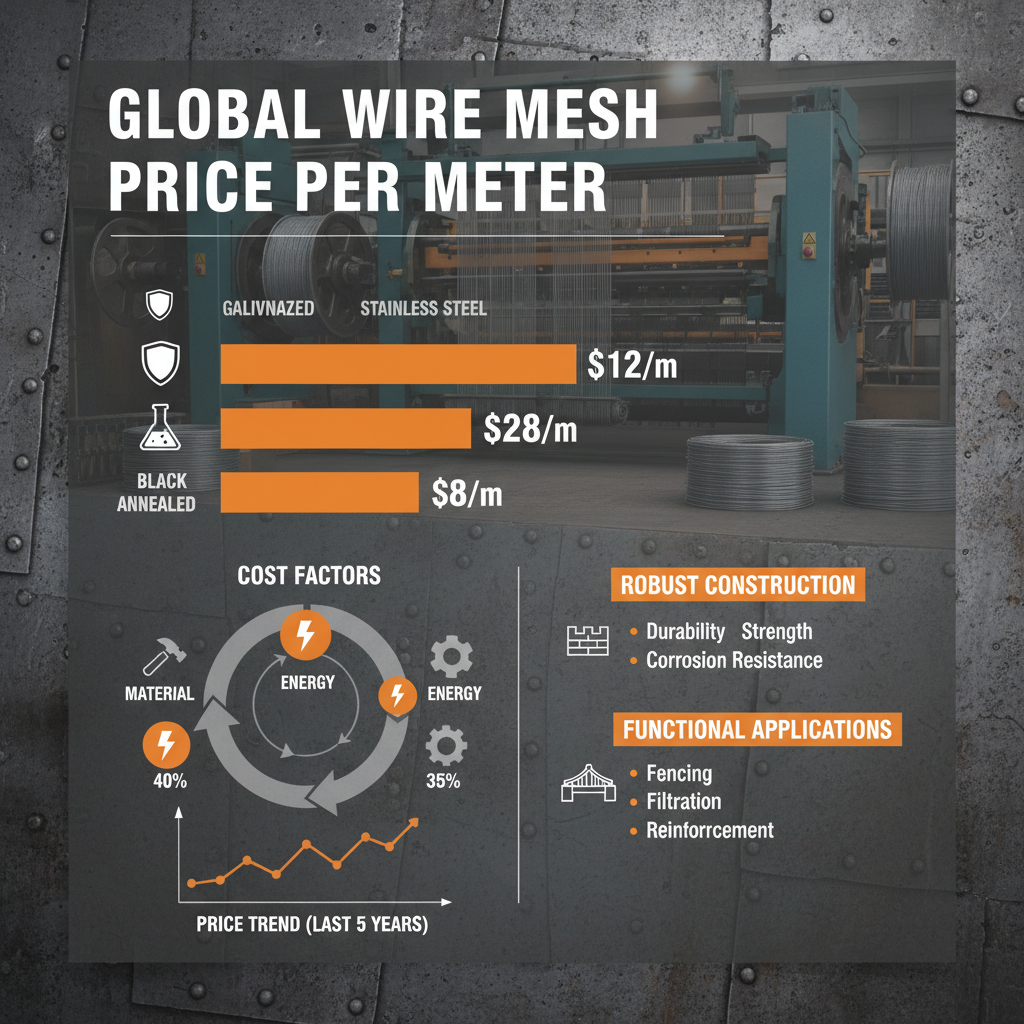
Several key components determine the wire mesh price per meter. The first is the material type. Stainless steel mesh, known for its corrosion resistance, is significantly more expensive than galvanized steel mesh. Aluminum mesh offers a good balance of cost and corrosion resistance, falling in between these two options. Secondly, the wire diameter plays a crucial role – thicker wires demand higher raw material costs and more complex manufacturing.
Thirdly, the mesh size (aperture) influences the price. Finer mesh with smaller openings requires more wire and increased production time, thus driving up the cost. Fourthly, surface treatment adds to the price. Galvanizing, PVC coating, or other protective finishes increase durability but also add manufacturing costs. Finally, order quantity has a significant impact; larger orders typically qualify for bulk discounts.
The weave pattern also affects cost. More complex weaves, like twill weaves, require specialized machinery and skilled labor, increasing production costs compared to simpler plain weaves. These components are interconnected, making it crucial to consider all factors when evaluating a quote for wire mesh price per meter.
Global Applications & Industries
Wire mesh finds extensive application across a diverse range of industries. In construction, it’s vital for reinforcing concrete, creating structural stability, and improving the durability of buildings. The wire mesh price per meter for construction-grade materials is a major cost factor in large-scale projects. In agriculture, it's used for fencing, poultry netting, and crop protection, offering a cost-effective solution for animal containment and preventing damage from pests.
The security industry relies heavily on wire mesh for creating robust barriers and protective enclosures. High-security fencing often employs thicker, more durable wire mesh, commanding a higher wire mesh price per meter. The filtration industry uses wire mesh for creating filters for liquids and gases, demanding specific mesh sizes and materials. Furthermore, mining and quarrying use wire mesh for screening and separation of materials.
Geographically, demand is high in rapidly developing nations like China and India, where infrastructure projects are prevalent. In North America and Europe, the replacement and renovation of aging infrastructure contribute to consistent demand. Post-disaster relief operations frequently require large quantities of wire mesh for temporary shelters and debris containment, driving up demand and potentially impacting the wire mesh price per meter in affected regions.
Wire Mesh Price per Meter Comparison (USD/Meter)
Advantages and Long-Term Value
Investing in quality wire mesh, even at a slightly higher wire mesh price per meter, often translates to long-term cost savings. Increased durability reduces the frequency of replacements, lowering maintenance costs. Materials like stainless steel offer superior corrosion resistance, extending the lifespan of the mesh in harsh environments. This is particularly relevant for infrastructure projects where longevity is paramount.
Beyond cost considerations, wire mesh contributes to safety and security. Robust fencing protects property and prevents unauthorized access. Reinforced concrete structures are more resistant to earthquakes and other natural disasters, safeguarding lives and assets. Furthermore, environmentally friendly options, such as recycled wire mesh, promote sustainability and reduce environmental impact.
Future Trends and Innovations
The wire mesh industry is undergoing continuous innovation, driven by demands for improved performance, sustainability, and cost-effectiveness. The development of new alloys and coatings is enhancing corrosion resistance and extending lifespan. Automation in manufacturing processes is increasing efficiency and lowering production costs, which may affect the wire mesh price per meter.
The integration of smart technologies, such as sensors embedded within wire mesh structures, is enabling real-time monitoring of stress, strain, and environmental conditions. This technology has applications in structural health monitoring and predictive maintenance. Furthermore, research into bio-degradable wire mesh materials is gaining traction, offering a sustainable alternative for temporary applications.
Challenges and Solutions
One of the primary challenges facing the wire mesh industry is the volatility of raw material prices, particularly steel. This fluctuation directly impacts the wire mesh price per meter and makes accurate budgeting difficult. Another challenge is ensuring consistent quality across different manufacturers and suppliers. Counterfeit or substandard products can compromise safety and performance.
Solutions include establishing long-term supply contracts to lock in prices and mitigating the impact of market fluctuations. Implementing rigorous quality control measures and sourcing from reputable suppliers are essential for ensuring product integrity. Investing in automation and lean manufacturing techniques can improve efficiency and reduce production costs, potentially stabilizing the wire mesh price per meter.
Furthermore, exploring alternative materials and manufacturing processes can reduce reliance on traditional steel and mitigate price volatility. Collaboration between industry stakeholders and research institutions can drive innovation and address these challenges effectively.
Summary of Challenges and Solutions Related to Wire Mesh Price per Meter
| Challenge |
Impact on Wire Mesh Price per Meter |
Proposed Solution |
Expected Outcome |
| Raw Material Price Volatility |
Significant fluctuations in steel and aluminum prices directly affect production costs. |
Long-term supply contracts, hedging strategies. |
Stabilized pricing, improved budget predictability. |
| Quality Control Issues |
Substandard materials can lead to premature failure and increased lifecycle costs. |
Rigorous testing, supplier audits, adherence to industry standards. |
Enhanced product reliability, reduced maintenance. |
| Manufacturing Inefficiency |
Outdated processes lead to higher production costs. |
Investment in automation, lean manufacturing techniques. |
Reduced production time, lower operational expenses. |
| Supply Chain Disruptions |
Global events can interrupt material flow and increase lead times. |
Diversification of suppliers, strategic inventory management. |
Improved supply chain resilience, minimized disruptions. |
| Lack of Transparency |
Obscured pricing structures and hidden fees. |
Demand detailed cost breakdowns, establish clear contract terms. |
Fairer pricing, improved trust. |
| Environmental Concerns |
Traditional manufacturing processes can have a significant environmental footprint. |
Adoption of sustainable materials and eco-friendly manufacturing practices. |
Reduced environmental impact, enhanced corporate social responsibility. |
FAQS
Several factors contribute to price changes, including raw material costs (particularly steel and aluminum), energy prices, labor costs, transportation expenses, and overall market demand. Geopolitical events and trade tariffs can also significantly impact the wire mesh price per meter. Supply chain disruptions play a key role as well, influencing availability and cost.
Generally, a smaller mesh size (finer openings) increases the wire mesh price per meter. This is because creating finer mesh requires more wire per square meter and a more complex manufacturing process. The increased density and precision needed translate directly into higher production costs, thus leading to a greater price.
Stainless steel wire mesh is significantly more expensive than galvanized steel wire mesh. This is due to the higher cost of stainless steel alloy and its superior corrosion resistance. While galvanized steel offers good protection against rust, stainless steel provides a longer lifespan and is suitable for harsher environments, justifying the higher wire mesh price per meter.
Yes, suppliers often offer volume discounts for large orders. Negotiating a long-term contract, providing accurate quantity forecasts, and establishing a strong relationship with a reputable supplier can all help secure a more favorable wire mesh price per meter. Being flexible with delivery schedules can sometimes lead to additional discounts as well.
Shipping costs can represent a significant portion of the overall cost, especially for international orders or large, heavy shipments. The distance, shipping method (sea, air, land), and fuel surcharges all contribute to the final price. It's crucial to obtain a detailed shipping quote from the supplier to accurately determine the total wire mesh price per meter.
The wire gauge, or thickness, directly impacts the wire mesh price per meter. Thicker wires require more raw material and a more robust manufacturing process, resulting in a higher cost. Selecting the appropriate wire gauge for your application is crucial – using a thicker gauge than necessary increases cost without providing additional benefit, while using too thin a gauge compromises strength and durability.
Conclusion
Understanding the intricacies of wire mesh price per meter is vital for successful project planning and procurement. As we’ve explored, the price is influenced by a complex interplay of factors – from raw material costs and manufacturing processes to mesh specifications and shipping expenses. By carefully considering these elements, businesses and individuals can make informed decisions and optimize their budget allocation.
Looking ahead, the wire mesh industry will continue to innovate, driven by demands for sustainability, efficiency, and improved performance. Staying abreast of these trends and fostering strong relationships with reliable suppliers will be essential for navigating the evolving market landscape and securing the best possible value. We invite you to visit our website at www.chengsenwiremesh.com to explore our extensive range of wire mesh products and receive a personalized quote.




.png "E-mail")